
Azra alware
Lighting can change how a room feels. It can make your space feel warm and inviting, or cold and flat. And yet, it’s something so many of us don’t think too much about. Most people just fit in a bulb, flip the switch, and call it a day. But bad lighting choices can make even a well-designed space feel off.
Maybe your living room feels a little too sterile, or your bedroom feels oddly clinical. If that sounds familiar, you’re not alone. Here are six common lighting mistakes you might be making – and easy ways to turn things around.
1. Relying on a single overhead light: You know that one light smack in the centre of the ceiling? Yeah, it’s doing way too much heavy lifting. Relying on just that is like expecting a single spotlight to do the job of an entire lighting crew. It leaves the room looking flat, too bright in some places and weirdly shadowy in others.
Overhead lights are good for general brightness, but they’re not really meant to highlight anything special. That’s where other lights come in – a warm floor lamp by the sofa, a soft bedside light, a cute little desk lamp. These extras bring depth, warmth, and vibes. They make a space feel inviting instead of just ‘lit’.
2. Neglecting hallways and transitional spaces: Hallways and those in-between areas often get forgotten when it comes to lighting. They’re seen as places you rush through, not spots to hang out. But here’s the thing. These spaces set the tone for the rest of your home. Dark, gloomy hallways can make the whole house feel cramped or uninviting.
Good lighting in these spots doesn’t have to be flashy or complicated. A simple wall sconce, a row of small ceiling lights, or even LED strips can make a huge difference. It may highlight architectural details, and make everything in the house feel more connected.
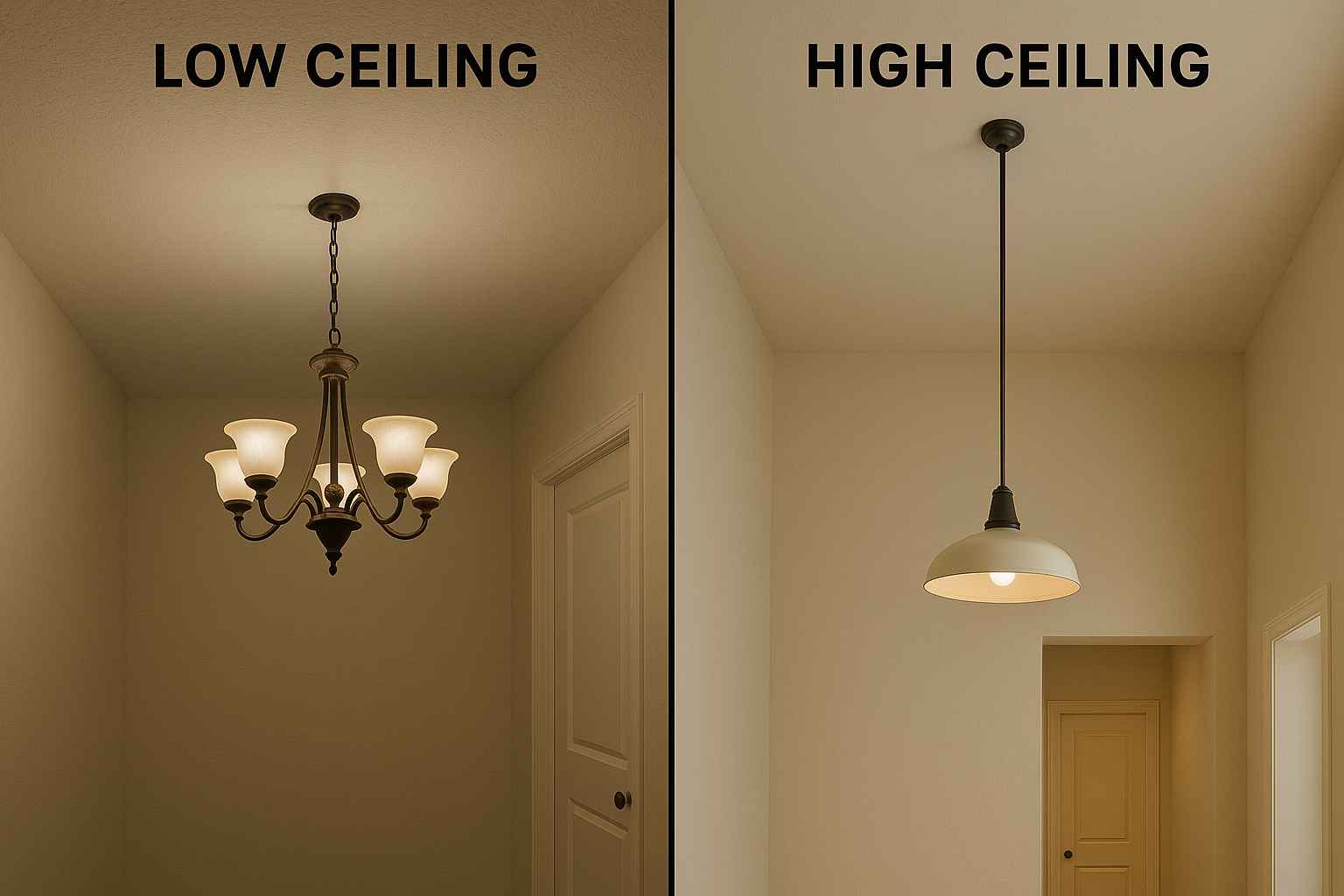
3. Ignoring ceiling height when choosing fixtures: Ever bought a light fixture that looked amazing in the store, only to find it totally out of place once you hung it at home? This happens because you haven’t taken into account your ceiling height before picking your lighting.
If your ceilings are low, a giant chandelier or a long pendant can feel like it’s crowding the room – even making you bump your head! On the flip side, super-high ceilings need bigger fixtures to fill the space and avoid looking tiny or lost. The key is matching your lighting to your room’s height so that it feels balanced.
4. Putting bright task lights in relaxing zones: You’re trying to relax in your living room or bedroom but instead of feeling snug, you’re stuck under harsh lighting that makes the whole place feel more like a dentist’s office. That’s exactly what happens when you use those super-strong task lights – an ultra-bright desk lamp, or cold overhead fluorescent – in spaces where you’re supposed to relax.
Chill zones need soft, warm lighting that helps you unwind – like cosy lamps you can dim, warm-toned bulbs, or even some twinkly lights to create a calming atmosphere. Bright task lighting works well when you need to focus, like at your desk or in the kitchen, but when it’s time to relax, softer lighting is the way to go.
5. Over-lighting small rooms: Ever stepped into a small room that’s so bright it feels overwhelming, and kind of hurts your eyes? That sometimes happens when you dump too much light into a small space. Instead of being well-lit, the room ends up feeling harsh and uncomfortable.
Rooms actually do better with softer, more balanced lighting. A gentle ceiling light paired with a couple of lamps or wall lights can jazz things up just right without making it jarring. Keep it comfy and inviting; don’t make it appear as if you’re stuck under a spotlight.
6. Ignoring glare issues: Glare is often overlooked but can significantly affect the comfort and usability of a space. When light bounces off glass surfaces or screens at certain angles, it creates harsh reflections that strain the eyes and disrupt the ambience. Many don’t realise how the placement and intensity of lighting can contribute to this.
Addressing glare involves thoughtful positioning of light sources, opting for softer bulbs, and using window treatments like sheer curtains to diffuse natural light when it comes to interior space. Taking time to fix glare can change how your space feels.
At the end of the day, good lighting isn’t about having the brightest bulbs or the fanciest fixtures. It’s about making your space feel comfortable and easy to live in. Fixing these simple mistakes can totally change the way your rooms look and feel without requiring a major redo.
Pro tip: Try layering your lighting. Mix overhead lights, floor lamps, and little accent lights to create a flexible space that works for you.
--ends--