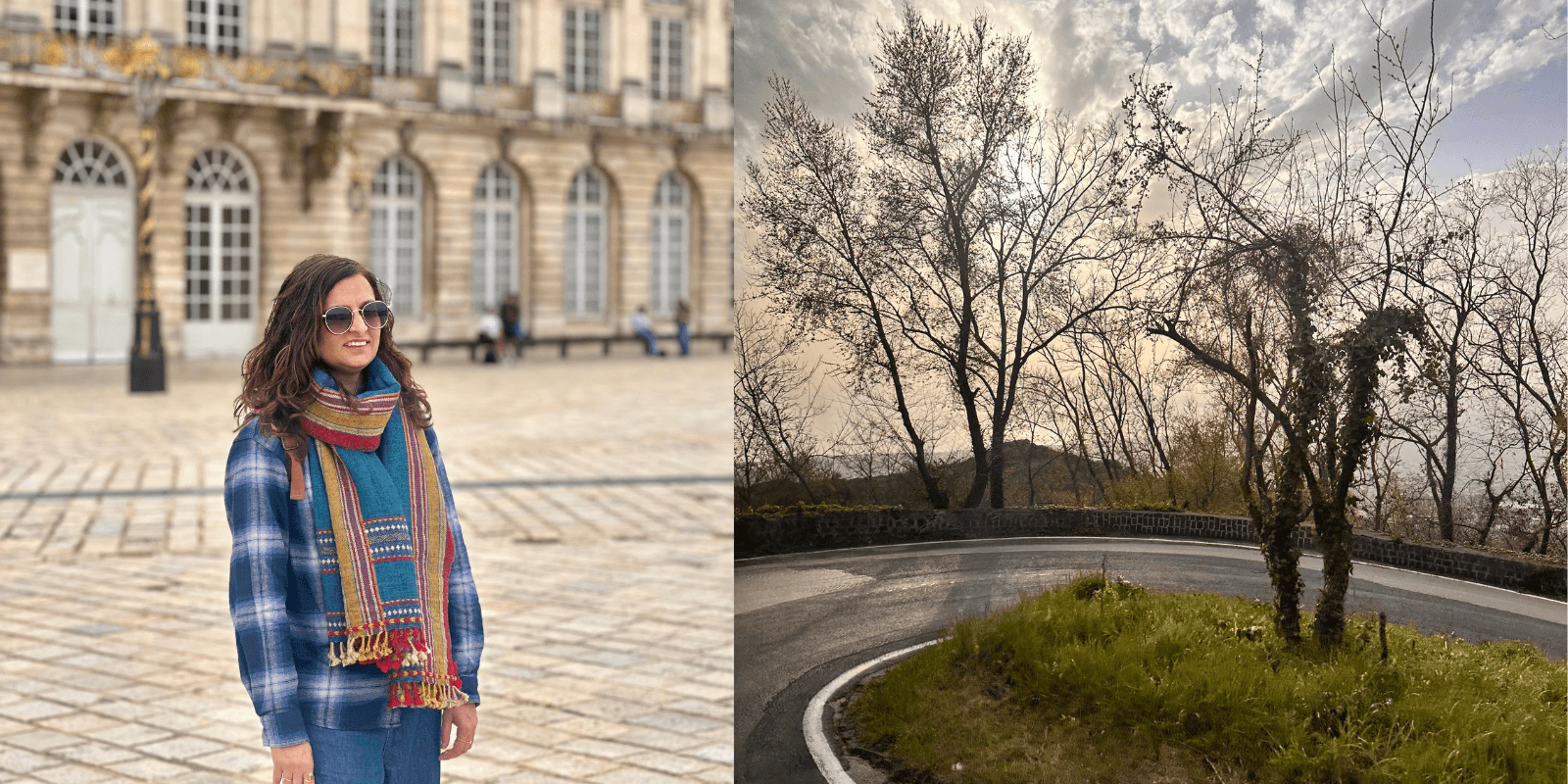
Akanksha Dureja
While planning a trip to Naples, the pizza capital of the world, my mind flashed back to a geography class in school, in which we learnt about Mount Vesuvius, an active volcano that last erupted in 1944. I have always nursed the urge to visit places from those school textbooks, and discovering that Mt. Vesuvius isn’t too far from Naples was reason enough to add one more day to my busy itinerary.
Vesuvius is regarded as one of the world’s most dangerous volcanoes because of its proximity to residential areas, and owing to past eruptions that caused widespread damage to the cities of Pompeii, Herculaneum, Oplontis, and Stabiae. Nevertheless, unless a warning has been issued, it is safe to visit—one can even hike to see the crater, which is what I did.
There are many local legends associated with Mt. Vesuvius, each more intriguing than the last. In ancient times, the mountain was believed to be the dwelling place of Vulcan, the Roman god of fire and metalworking. People thought eruptions were a sign of his anger—or ‘divine punishment’, especially for the decadence of cities like Pompeii and Herculaneum. Another legend suggests that Pompeii was cursed for its immorality and indulgent lifestyle. Indeed, the eruption of 79AD was seen as a retribution from the gods, and a moral warning to future civilizations.
A lesser-known local legend tells of a farmer who lived peacefully on the slopes of Vesuvius. But one night, he heard the mountain “speak” and fled with his family; the next day, the eruption began. The escape is often shared to highlight the importance of listening to nature’s portents. Reading these folk tales only deepened my curiosity about visiting this iconic volcano.
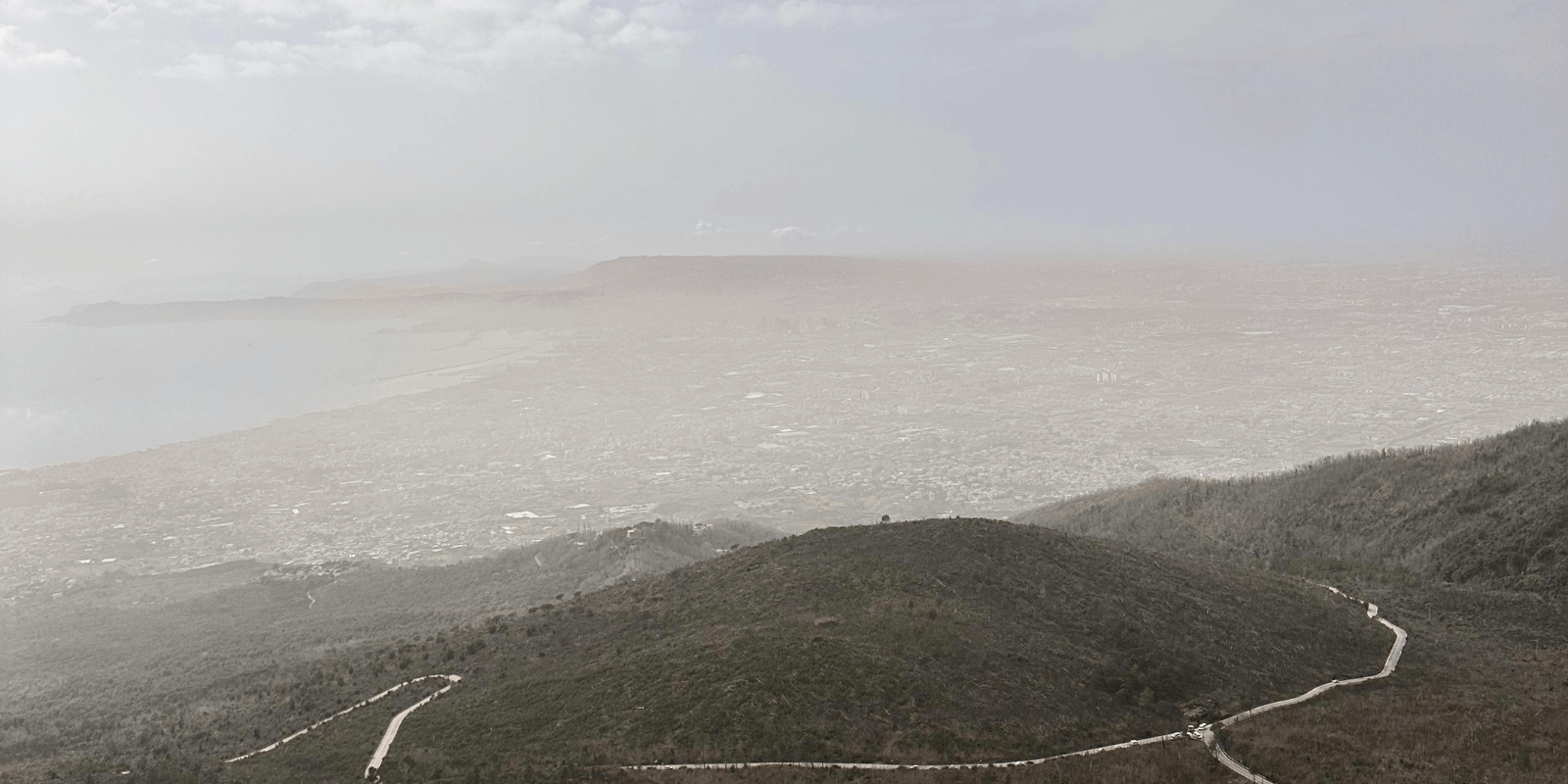
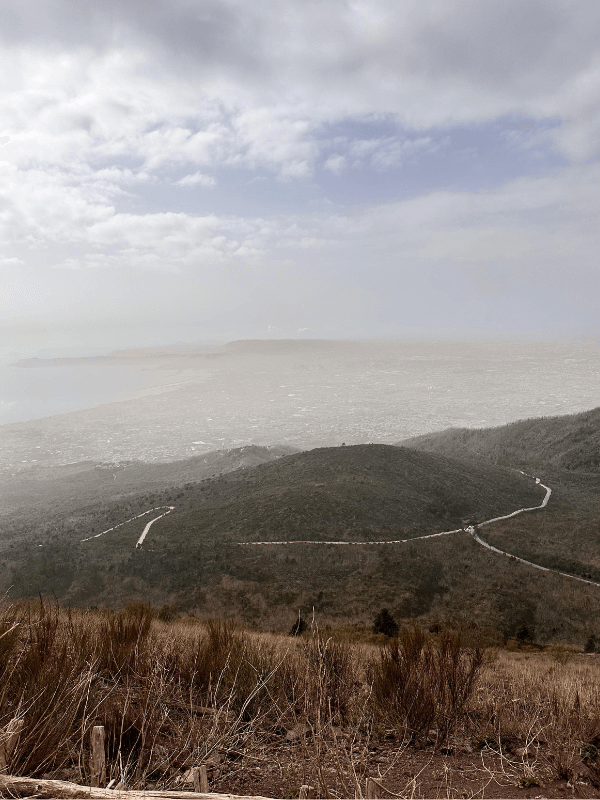
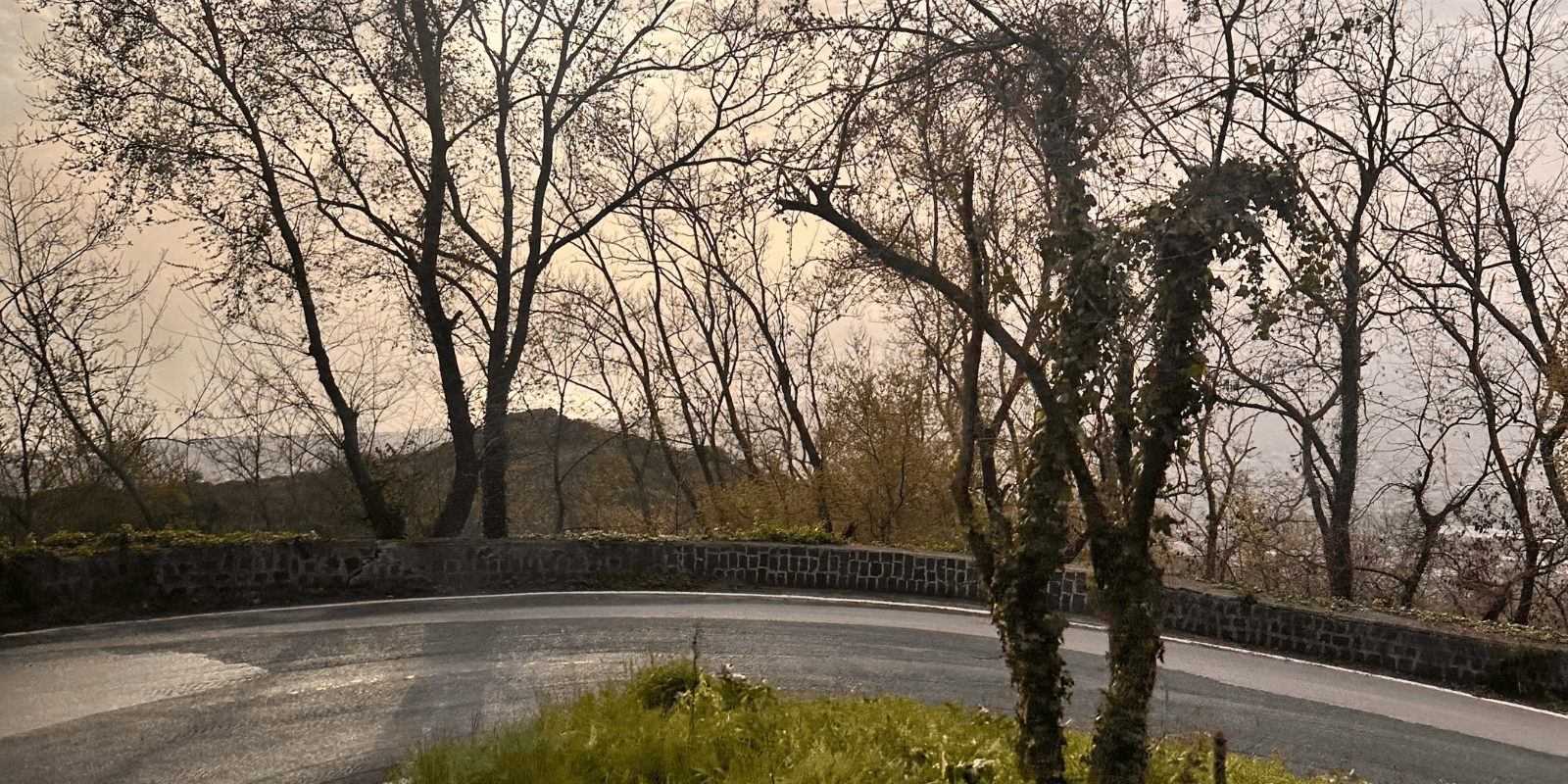
Having spent a couple of days roaming from one Naples eatery to another, it was finally time to burn off those calories! So, I hopped on to the Circumvesuviana train from Napoli Centrale, which took me—after an hour-long journey interspersed with picturesque vistas of Mt. Vesuvius and the Bay of Naples—to the ancient city of Pompeii, famous for its historic relics. From here, the hike to Mt. Vesuvius begins in earnest, with a short but rickety bus ride to the base camp, with views so beautiful that it was hard to concentrate on the task at hand—buying tickets for the hike online. This is something you need to do before reaching the base camp, a spot that since the pandemic has neither any network connectivity nor an offline ticketing system.
More pretty panoramas and many a hairpin bend later, we reached the camp, which was buzzing with hikers, and had the distinctive scent of volcanic dust lingering in the air. I began the climb with the excitement of a child in a candy store, living a moment that once seemed lost in an old geography textbook. Never in my wildest dreams did I imagine that someday I’d get to see what I had read about as a student and found so intriguing. Flashes of school projects depicting volcanoes came rushing back, making the day all the more special. Incidentally, this was my second such hike, the first being the mighty Hallasan on Jeju island, South Korea.
Compared to Hallasan, which was a gruelling trek, Vesuvius proved fairly easy, dotted as the trail is with many a shop selling snacks made from local produce, and souvenirs crafted from volcanic ash. It was a well-defined route but one that certainly needed proper trekking shoes due to the terrain, which was covered in stones and ash. With views of the Bay of Naples on one side and volcanic boulders on the other, it turned out to be a truly memorable experience, one filled with adventure and thrills. And as we trekked upwards, the sun slowly gave way to clouds, and we could feel a chill in the air.
Soon, we reached the first viewpoint, where plumes of steam emerged from the volcanic rocks below us. It was a sight I would never forget—witnessing a volcano in action, even though we were still far from the crater. Then, a few photographs later, we decided to move ahead along the trail to the summit.
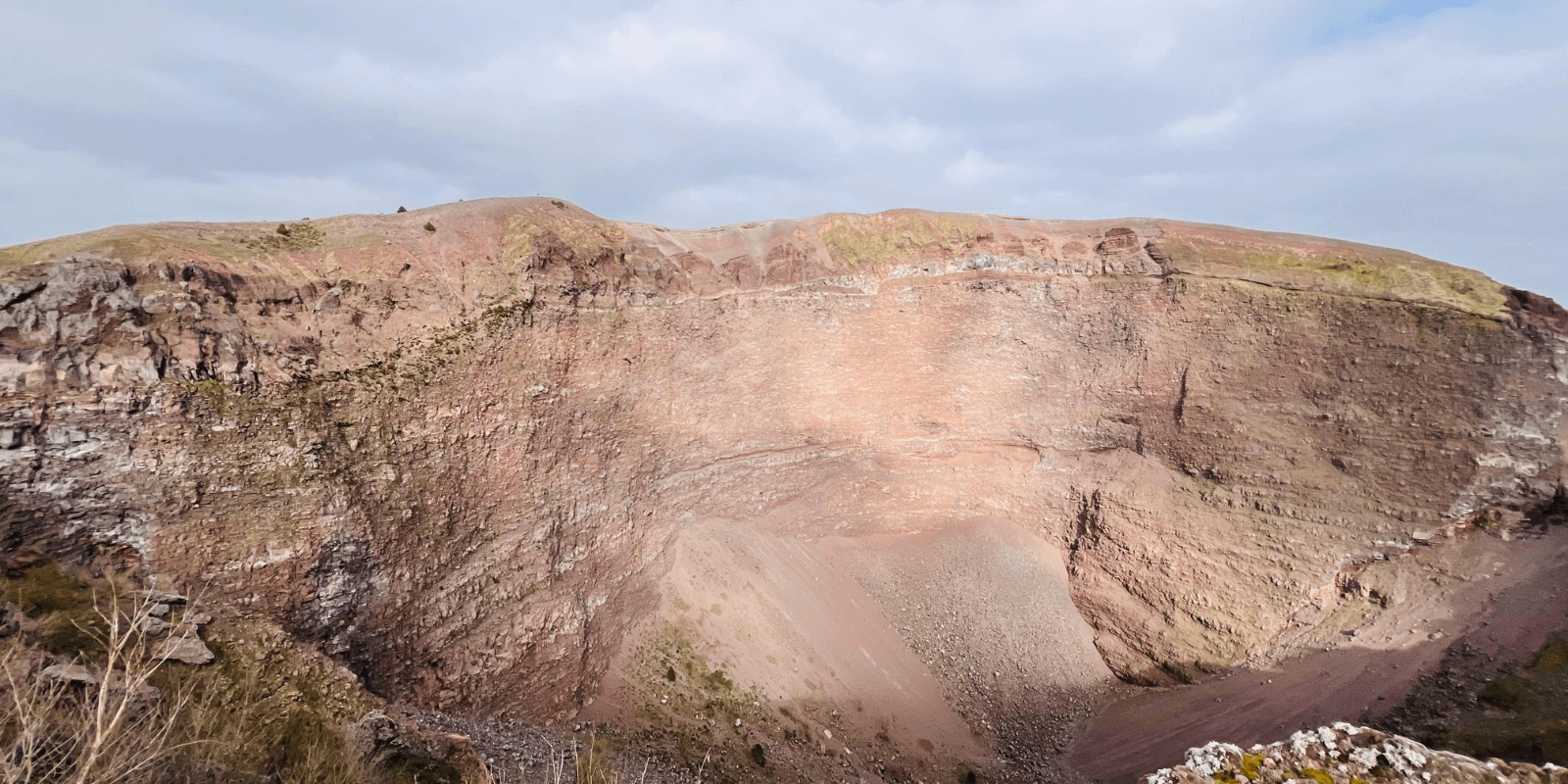
It was nothing like I had ever imagined, nothing like the black-and-white pictures in my old geography primer. In fact, I don’t think anything could have prepared me for what I came across. Seeing fumes rising from the crater lent the encounter an almost unreal quality, and I felt a deep sense of achievement just being there, beholding an active volcano in all its glory. Being able to absorb the raw forces of nature enveloped my restless self in a calm that’s hard to put into words. I guess that’s what Mother Nature does to you, when you open your senses up to her.
It was hard to look away and begin the descent, but one must always respect the mountain and follow the law of nature. Truly, though, the hike to Mount Vesuvius was a one-of-a-kind experience, and if you’re ever in Naples, it’s one you absolutely shouldn’t miss.
--ends--