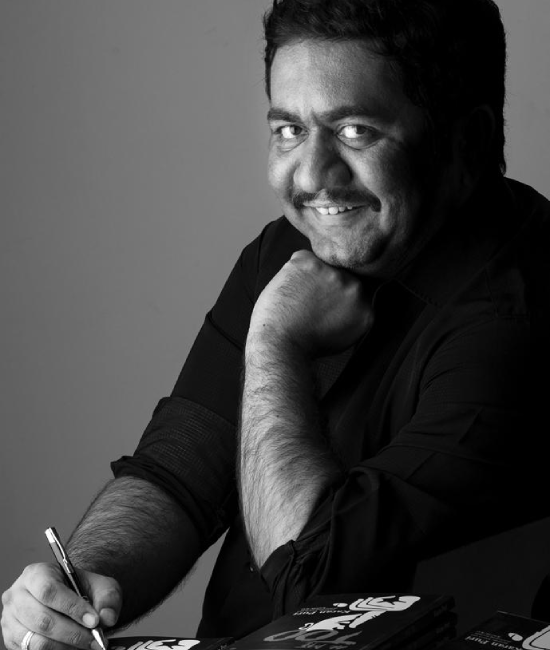
Subhashish Chakraborty
Like an umbilical cord, my family’s ties with the Ramakrishna Math go back several generations, my parents having had the good fortune to take the holy dip in the Haridwar Kumbh Mela, back in 1998. But with both of them having left the earthly realm, a sudden phone call from my Dubai-based younger brother, on the evening of February 21, triggered in me an irresistible urge to take part in the 2025 Mahakumbh.
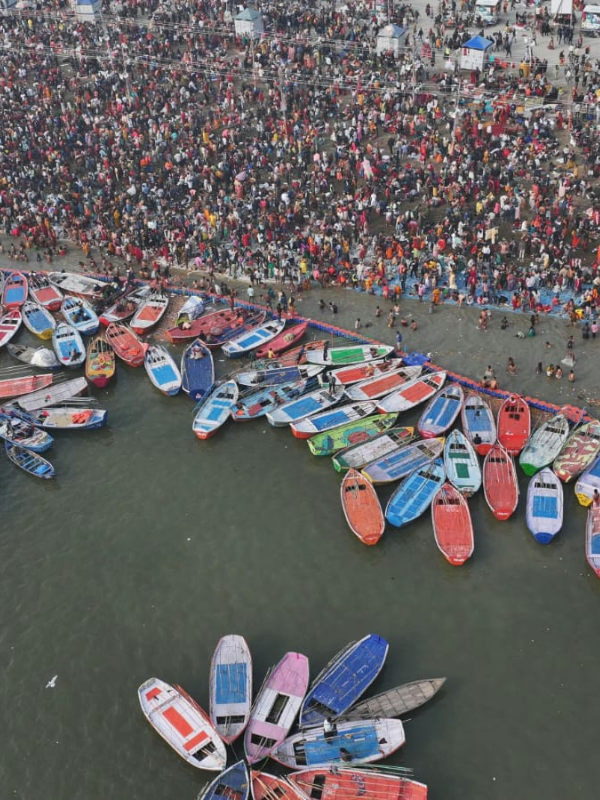
As someone who has always been spiritually inclined, I was tremendously swayed by the unprecedented media coverage the Mahakumbh (Jan 13-Feb 26) received. Still, I never realistically thought of venturing to Prayagraj in the midst of the utter chaos—the transportation hassles, non-availability of accommodation, and the formidable challenge of immersing oneself among a sea of humanity, all of 660 million—until my soul called out to me.
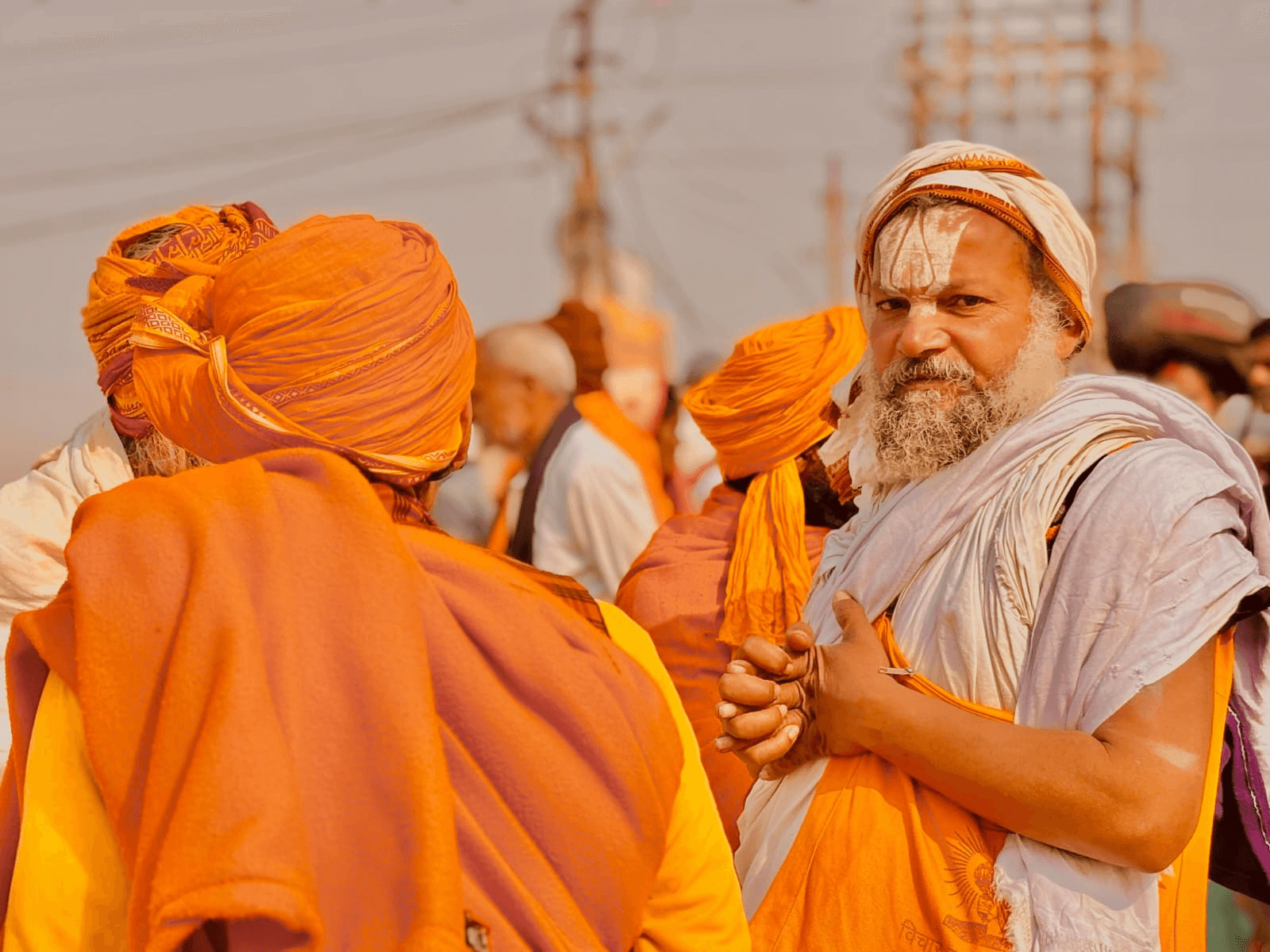
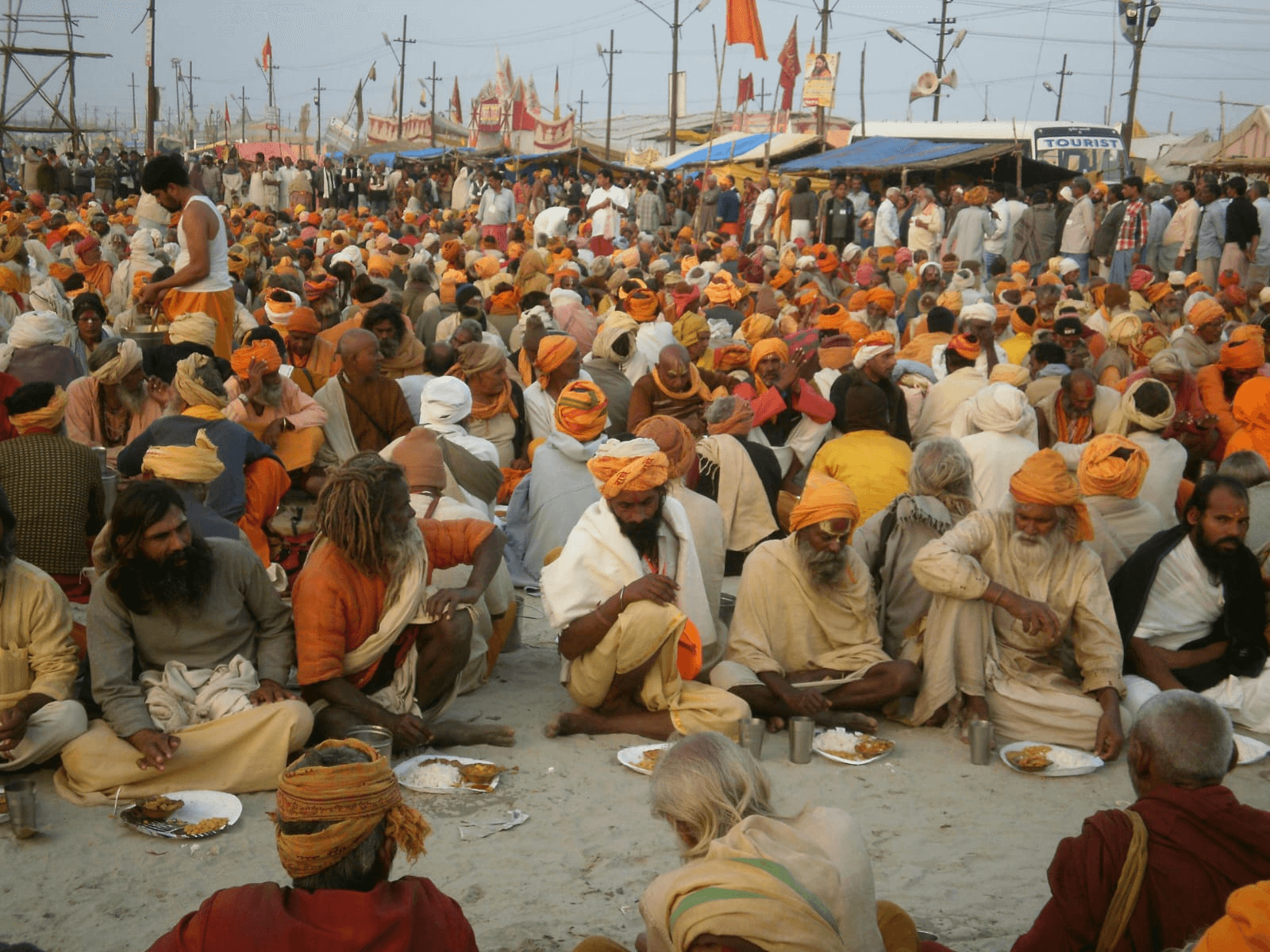
It was all very last minute. From Kalyani, West Bengal, we headed to Prayagraj, 770kms away, by road—yes, by road! I had explored every possibility, including air and rail, and even toyed with the idea of travelling on a VOLVO bus. But, much to our consternation, I drew a blank. All paths seemed closed. However, after spending hours talking on the phone, my brother and I plumped for the only remaining option: self-drive.
So, I hired a Maruti Suzuki Dzire, and as news of my impending pilgrimage to the Mahakumbh spread in my locality, three daily-wage workers—a carpenter, plumber, and painter-cum-mason, all of whom had in the past worked at my house—showed interest in joining us, requesting me to somehow accommodate them on-board and onwards to Prayagraj, via Varanasi.
With time running out, we hurriedly packed all we could—food, clothing, gas oven—and with my guru mantra on my lips, commenced our odyssey at around 7 am on February 23.
Varanasi Detour: Pind Daan
Since we had yet to book our accommodation, I started making frantic calls from 4 pm, even as we sped along NH-19 towards Varanasi. And after reaching out to 25 hotels and lodges, I managed—with the help, it appeared, of divine intervention—to book a room in a guesthouse (Golden Lodge) adjacent to the city’s Kashi Vishwanath temple.
A refreshing shower was followed by a quick Banarasi dinner at 11.30 pm, after which we retired for the night—only to wake up at 5 am, when we hurriedly checked out of the lodge and embarked on a long walk to Harishchandra Ghat, the nearest Mahashamshan (cremation ground), passing through the super-crowded alleyways of Varanasi. At the ghat, we were greeted by the site of numerous ash-smeared Aghori Babas, each one blessing devotees and pilgrims with their customary elongated wooden poles of peacock feathers, a gentle pat on the head followed by a thump on the back!
With my father having passed away a year back, performing Pind Daan in Varanasi was of great personal significance, as this ritual is believed to be highly auspicious in the Hindu Sanatani tradition.
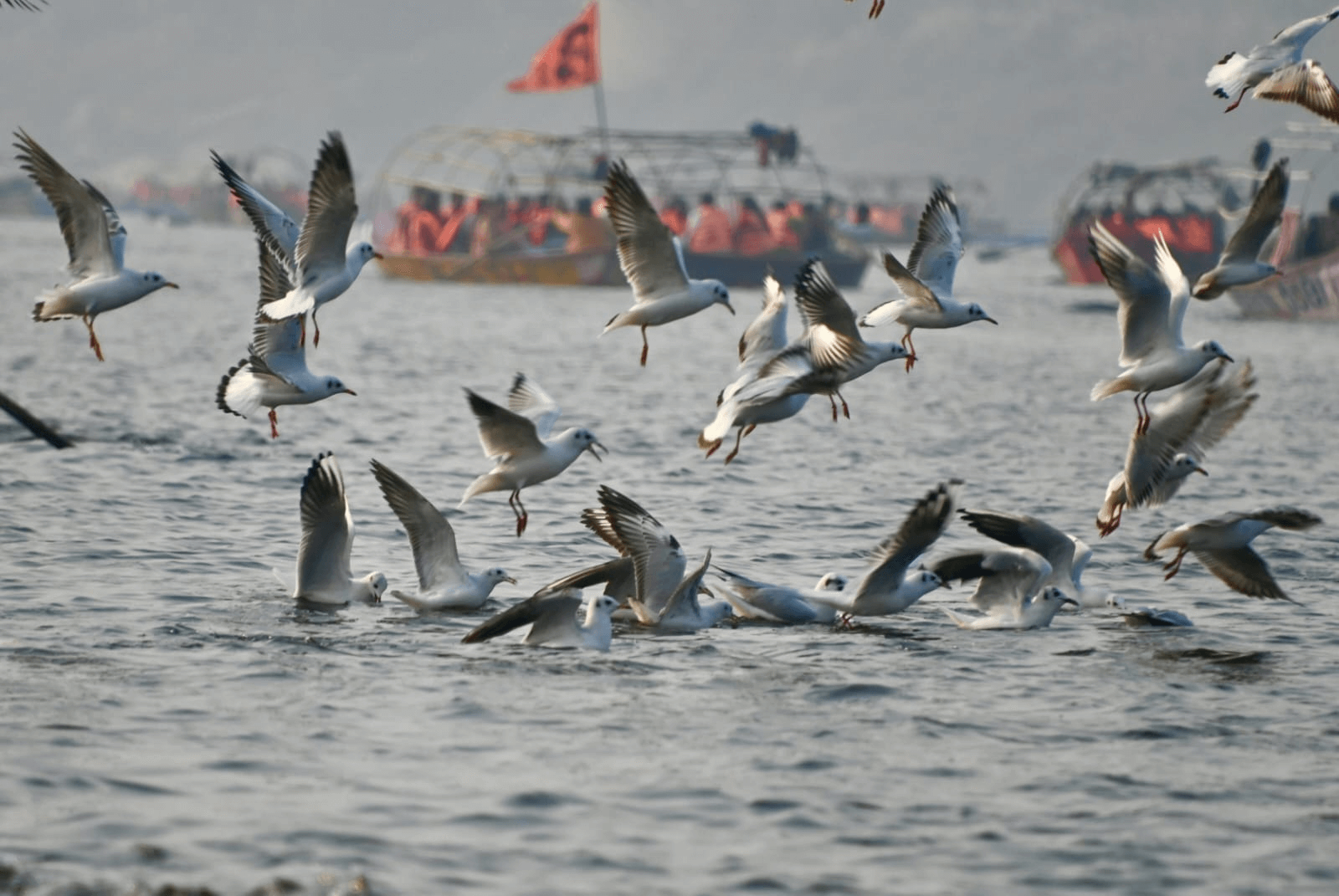
Multitudes of pilgrims had assembled at the ghat, the majority carrying a yearning in their hearts to perform this once-in-a-lifetime ritual of their ancestors. The scene was straight out of a melodrama: Naga Sadhus chanting mysterious mantras invoking the divine, hundreds of boats on the holy Ganges ferrying pilgrims back and forth, and those corpses burning away endlessly. The setting was truly surreal, a reminder to humanity of the vanity of our material existence!
However, once you reserve a slot and sit down quietly on the banks of the river to perform the Pind Daan, there indeed is harmony in the midst of all the ghat’s chaos and cacophony. The pandits, well versed, guide you through the entire ritual, allowing you to embrace this sacred and very private experience worry-free. In fact, there are Tamil, Telugu, Malayali and Kannadiga pandits here to cater to the throngs of South Indian pilgrims who converge on the ghats every day, with the express intention of performing the Pind Daan.
Prayagraj Calls
After completing the Pind Daan, which lasted around 90 minutes, we had an impromptu lunch and proceeded in all earnest for Prayagraj, a distance of 123kms that we covered in three-and-a-half hours, the stretch on NH-19 thankfully free of major traffic snarls.
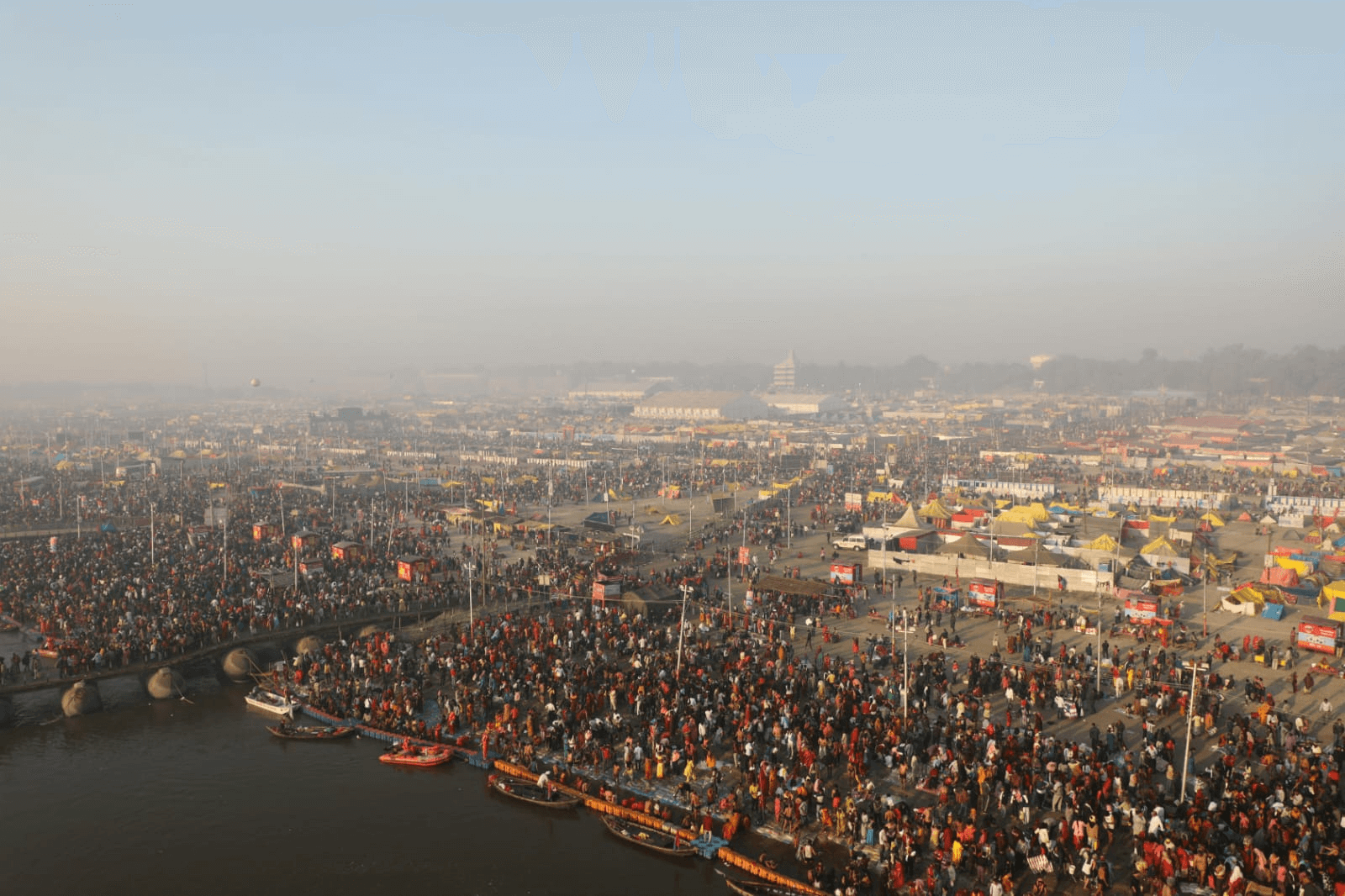
We had little idea where to halt for the night but as we entered the city of the Mahakumbh, an ocean of tents as far as the eye could see caught our attention, alongside dusty roads, floating jetties, and weary pilgrims on the move. We heeded the advice of the local police and drove on for another 15kms on those makeshift roads, which took us to the main amphitheatre. With just rucksacks, mobile phones and wallets in our possession, we then set off on the walk of our lives (some 20kms, we were told), one that led us to the bathing ghat.
But after just a kilometre on our feet, we found our energy levels dwindling, and walking any further seemed impossible. Yet, here again, there was intervention of the divine kind, courtesy an empty—and rickety—six-seater autorickshaw, the kind you find in Prayagraj. Its driver offered not only to transport us but also went the extra mile by arranging much-needed accommodation for us in his friend’s house.
Next morning, we awoke at 3 am and embarked on a walk, 8kms on bare feet, towards Kila, the nearest bathing ghat. There were other ghats like Dashashwamedh, Saraswati, Rasulabad and Triveni Sangam, but all were either too far or out of bounds for common pilgrims. By then, the preceding 48 hours of gruelling travel, lack of good sleep, and food eaten at roadside restaurants had already taken a toll on our physical, mental and emotional wellbeing, so much so that walking that last mile to Kila Ghat felt like a Sisyphean task. But finally, and thankfully, we made it to our destination.
The North Indian winter was on its last legs so it was quite chilly when we took the first few holy dips, alongside many thousands of pilgrims—from toddlers to the aged, from the length and breadth of India, and from across the globe—who were all united in their aim: to attain Moksha, or bliss.
Seeing is Believing
Every Kumbh is auspicious but the 2025 edition was the biggest ever congregation on Planet Earth. It was a spontaneous display of the spiritual abundance and magnanimity of Bharat, where one could literally live the experience of the phrase, ‘faith can move mountains,’ to the hilt.
The Mahakumbh offered to the world a glimpse of this land’s spiritual energy, an energy with which it has been blessed since the dawn of civilization. The sights and sounds of the Akharas—Bharat’s hidden spiritual laboratories that consist of the Mahanirvani, Niranjani, Atal, Anand, Juna and Avahana sects—cast a spell magical enough to leave pilgrims from every corner stupefied, hypnotised even.
For me and for millions of others, the road to the Prayagraj Mahakumbh wasn’t easy. Being the mother of all pilgrimages, it was a test of endurance, both physical and mental. Yet despite its rigours, a quest of such magnitude does leave behind a transformative—and purifying—impact on one’s mind and mindset. Needless to say, the Mahakumbh was a humbling experience.
In fact, I consider myself so very fortunate to have been a witness to this phenomenon, where 660 million pilgrims were accommodated in a temporary city spread over 4,000 hectares, where Bharat’s stupendous cultural and civilizational diversity, and her spiritual richness as reflected in the Sanatana Dharma, was on full display, and where saints and scholars exchanged ideas, as they have been doing for centuries.
For me, the biggest takeaway from the Mahakumbh was how purified I felt walking barefoot. The 10km tour on foot among the Aghori tents afforded me a rare close-up of the mysterious practices followed by this monastic order, including their post-mortem rites and extraordinary lifestyle. I returned with a greater perspective on and deeper appreciation for Bharat’s ascetic spirit, and also a profound connection with the divine, which otherwise would have been beyond my comprehension.
As a travel writer and spiritual practitioner, I encourage people everywhere to visit India for the Purna Kumbh Mela, which takes place every 12 years, or the Ardh Kumbh, which happens every six years. For, this one-of-its-kind gathering challenges the very contours of the conventional spirituality of today, and is your passport to an India you never knew existed.